

The Old Town of Herceg Novi represents the original nucleus of the settlement founded by King Tvrtko I of Bosnia in 1382. Initially known as Sveti Stefan, the town was conceived as a fortified outpost to secure Bosnian access to the Adriatic Sea and reduce reliance on Dubrovnik. The Old Town of Herceg Novi represents the original nucleus of the settlement founded by King Tvrtko I of Bosnia in 1382, a moment that defined the early history of Herceg Novi and shaped how the town developed over the centuries.
During the 15th and 16th centuries, control of the Old Town shifted repeatedly between regional powers, including the Ottomans and Venetians. Each regime reinforced the town’s defences, creating a dense concentration of fortifications, walls, and gates within a compact area.
Key landmarks such as Forte Mare Fortress, first constructed in the late 14th century and expanded under Ottoman and Venetian rule, and the Clock Tower, built during Ottoman administration in the 17th century, define the Old Town’s skyline. Španjola Fortress above the town further illustrates its long-standing military function.
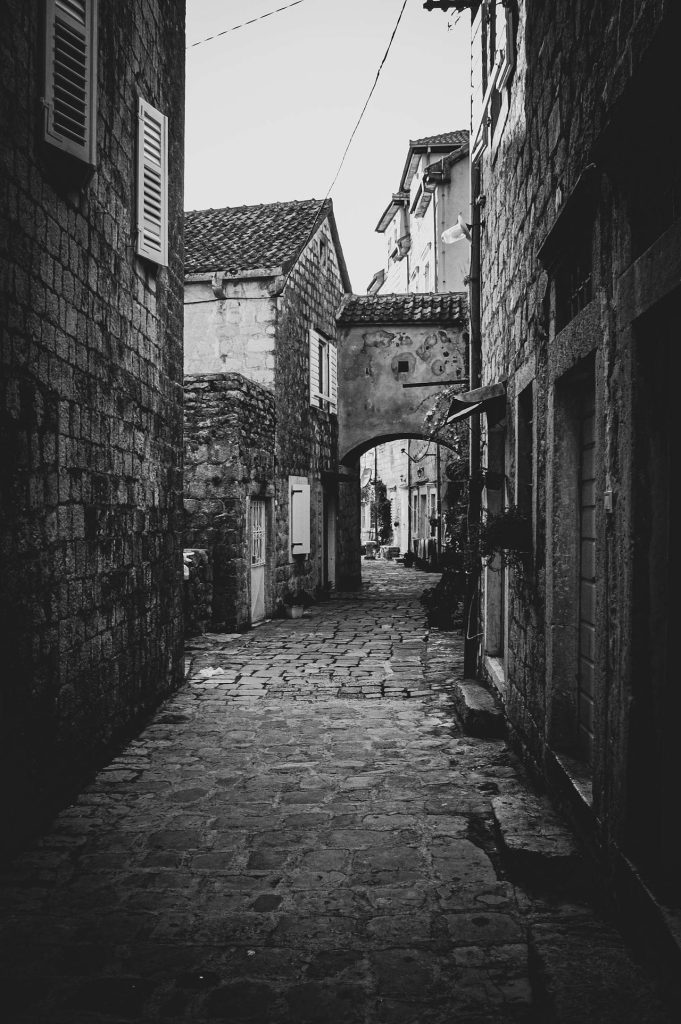
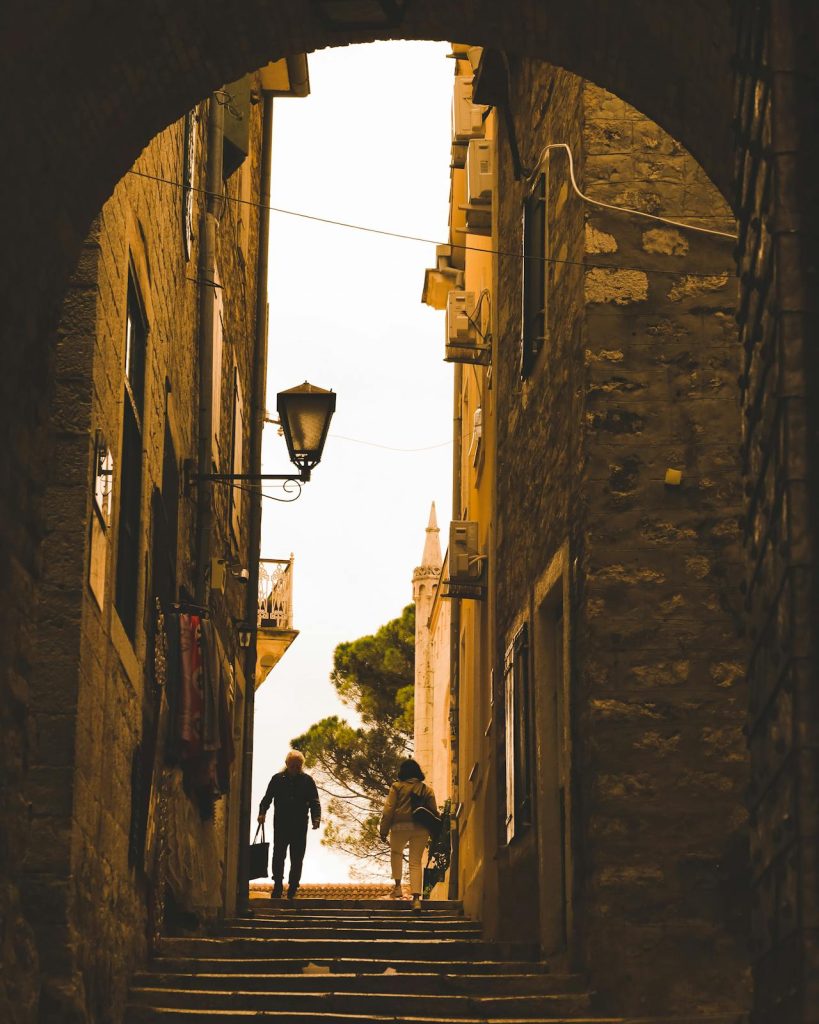
Despite centuries of conflict, the Old Town remained continuously inhabited. Its steep stairways, stone houses, and small squares reflect a pedestrian-oriented urban form that has changed little since the early modern period.
Today, the Old Town serves as Herceg Novi’s cultural and historical centre. It is home to small guesthouses, cafes, galleries, and public events, offering visitors direct access to the town’s layered past, while preserving a strong sense of historical continuity, though its vertical layout and limited vehicle access can be challenging for some travellers.
Old Town (Stari Grad): Medieval Foundations and Strategic Power
The Old Town of Herceg Novi represents the original nucleus of the settlement founded by King Tvrtko I of Bosnia in 1382. Initially known as Sveti Stefan, the town was conceived as a fortified outpost to secure Bosnian access to the Adriatic Sea and reduce reliance on Dubrovnik.
During the 15th and 16th centuries, control of the Old Town shifted repeatedly between regional powers, including the Ottomans and Venetians. Each regime reinforced the town’s defences, creating a dense concentration of fortifications, walls, and gates within a compact area.
Key landmarks such as Forte Mare Fortress, first constructed in the late 14th century and expanded under Ottoman and Venetian rule, and the Clock Tower, built during Ottoman administration in the 17th century, define the Old Town’s skyline. Španjola Fortress above the town further illustrates its long-standing military function.
Despite centuries of conflict, the Old Town remained continuously inhabited. Its steep stairways, stone houses, and small squares reflect a pedestrian-oriented urban form that has changed little since the early modern period.
Today, the Old Town serves as Herceg Novi’s cultural and historical centre. It is home to small guesthouses, cafes, galleries, and public events, offering visitors direct access to the town’s layered past, while preserving a strong sense of historical continuity, though its vertical layout and limited vehicle access can be challenging for some travellers.
Topla I and Topla II: Expansion Beyond the Walls
The neighbourhoods known as Topla I and Topla II developed primarily in the late 19th and early 20th centuries, following the incorporation of Herceg Novi into the Austro-Hungarian Empire after 1815. As military tensions eased and the town’s defensive role diminished, residential expansion beyond the Old Town walls became both possible and necessary.
Topla emerged as a practical residential zone, accommodating civil servants, tradespeople, and later workers employed in emerging tourism and service industries. Unlike the Old Town, Topla was shaped by planned streets and multi-storey residential buildings rather than medieval fortifications.
Throughout the 20th century, particularly during the Yugoslav period after 1945, Topla continued to grow as a functional urban area. Schools, medical facilities, local shops, and cafes were established to support a growing population.
While Topla lacks the visual drama of the Old Town, its elevated position provides expansive views over the Bay of Kotor. For visitors, it offers proximity to the town centre with more accessible accommodation options and a stronger sense of everyday local life.
Igalo: Health Tourism and the 20th-Century Coast
Igalo represents a decisive shift in Herceg Novi’s relationship with the sea. Located west of the historic centre, Igalo developed primarily in the 20th century, driven by changing attitudes toward health, leisure, and coastal tourism.
The area gained prominence in the early 1900s, when its mineral-rich mud and favourable climate attracted interest for therapeutic purposes. This development accelerated under socialist Yugoslavia after 1945, when state investment transformed Igalo into a major centre for medical rehabilitation.
The establishment of the Igalo Institute in 1949 marked a turning point, positioning the area as one of the leading health tourism destinations in the former Yugoslavia. Alongside medical facilities, hotels, beaches, and a long seaside promenade were constructed, fundamentally reshaping the coastline.
Unlike the steep terrain of the Old Town, Igalo is largely flat, making it more accessible for families, older visitors, and those seeking relaxed seaside walks. Its promenade connects directly to the town centre, reinforcing Igalo’s role as both a resort zone and an extension of Herceg Novi’s urban fabric.
Unlike the steep terrain of the Old Town, Igalo is largely flat, a feature that later allowed the development of beaches in Herceg Novi focused on accessibility, health tourism, and seaside recreation.
Savina: Monastic Heritage and Austro-Hungarian Influence
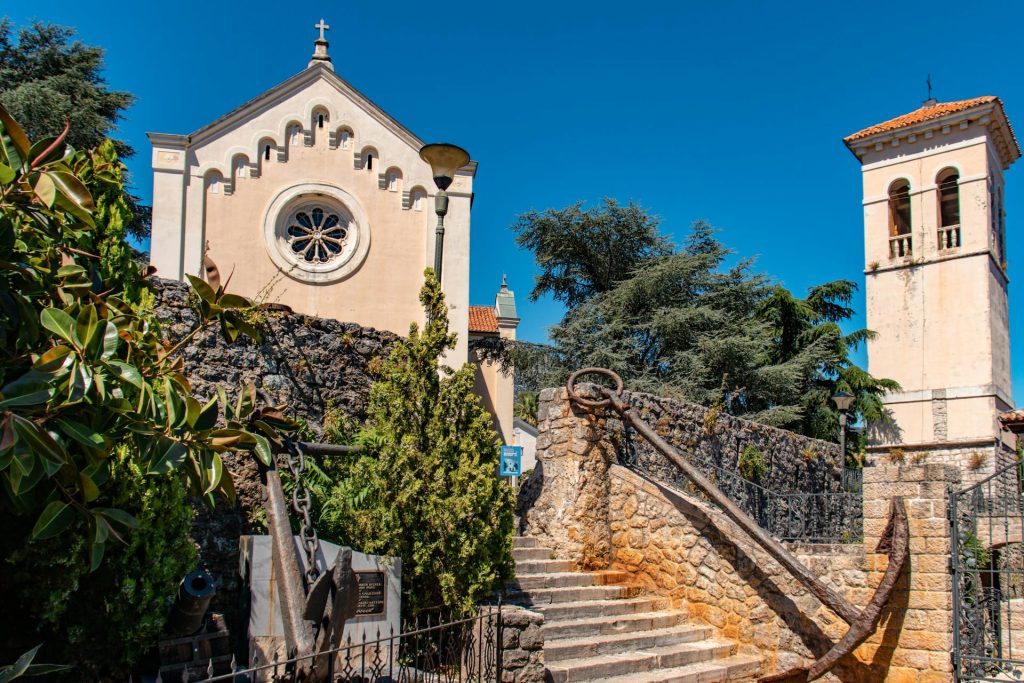
East of the Old Town lies Savina, an area defined by its religious, cultural, and architectural significance. The Savina Monastery complex, whose origins date back to the 11th century with major construction phases in the 17th and 18th centuries, anchors the area historically and symbolically.
During the Austro-Hungarian period in the 19th century, Savina became a desirable residential zone for wealthy families and officials. Elegant villas were constructed along the coast and on the surrounding slopes, reflecting contemporary European architectural styles and the area’s growing reputation as a refined retreat.
Savina developed more slowly and deliberately than Igalo, preserving green spaces and maintaining a quieter atmosphere. Its coastal paths and proximity to the monastery make it particularly appealing to visitors interested in cultural heritage and slower-paced exploration.
Today, Savina balances residential life with tourism, offering accommodation options that emphasise tranquillity rather than nightlife or commercial activity.
Meljine: Maritime Infrastructure and Connectivity
Meljine occupies a transitional position between Herceg Novi’s historic core and the broader Bay of Kotor coastline. Historically, it served military and maritime functions, particularly during the Austro-Hungarian period when naval infrastructure was expanded throughout the bay.
In the modern era, Meljine has become known for its marina and ferry connections, linking Herceg Novi to other parts of Montenegro and neighbouring Croatia. This role has shaped the area’s character, which combines residential buildings, transport facilities, and modest beaches.
While Meljine lacks the architectural cohesion of Savina or the recreational focus of Igalo, it offers practical advantages for visitors seeking mobility and access to the wider region.
Baošići and Đenovići: Coastal Villages and Modern Development
Further west of Igalo lie Baošići and Đenovići, coastal settlements that fall within the municipality of Herceg Novi. Historically small fishing villages, these areas retained a rural character well into the 20th century, with local economies centred on fishing, small-scale agriculture, and seasonal maritime trade within the Bay of Kotor.
During the Austro-Hungarian period in the late 19th and early 20th centuries, these villages remained largely peripheral to urban development, connected to Herceg Novi primarily by coastal paths and later by basic road infrastructure. In recent decades, improved road connections and marina development—particularly in Đenovići—have driven gradual transformation, bringing new residential and tourism-focused construction, especially following regional infrastructure investment after the 1990s.
Despite this, both areas remain quieter than the town centre, with low-rise buildings, waterfront promenades, and small beaches defining the landscape. These villages appeal to visitors seeking longer stays, privacy, and a slower pace, often favoured by families, seasonal residents, and repeat visitors, while serving as bases for exploring both Herceg Novi and the wider Bay of Kotor at a relaxed, unhurried rhythm.
Choosing the Right Area: History Meets Practicality
Selecting where to stay in Herceg Novi is less about distance and more about historical character and terrain. The Old Town offers immersion in medieval history but demands physical effort. Igalo reflects the town’s 20th-century embrace of tourism and wellness. Savina preserves cultural continuity and calm, while Topla and Meljine prioritise everyday functionality and access.
Understanding how and why these areas developed helps visitors align their expectations with reality, avoiding common misconceptions based on maps alone.
A Town Shaped by Layers
Herceg Novi’s neighbourhoods are not isolated zones but interconnected layers formed over more than six centuries. Each reflects a moment when strategic necessity, imperial administration, or social change reshaped the town’s relationship with the sea and the surrounding hills.
Exploring Herceg Novi through its areas reveals a town that has continually adapted without losing its identity. For visitors, this layered structure offers flexibility and depth, allowing multiple interpretations of the same destination.
As Herceg Novi Directory continues to expand, these neighbourhoods will serve as the foundation for more detailed guides, listings, and local insights, helping visitors engage with the town in an informed and meaningful way.
