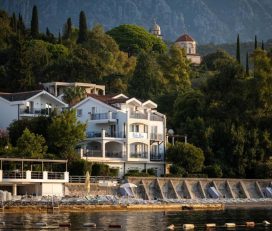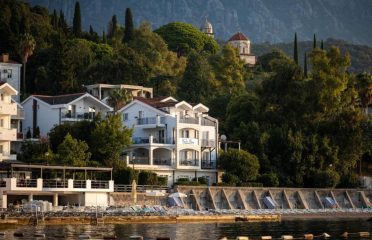

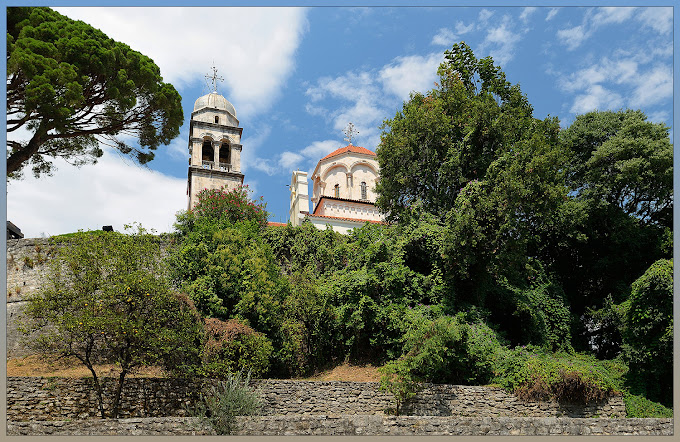
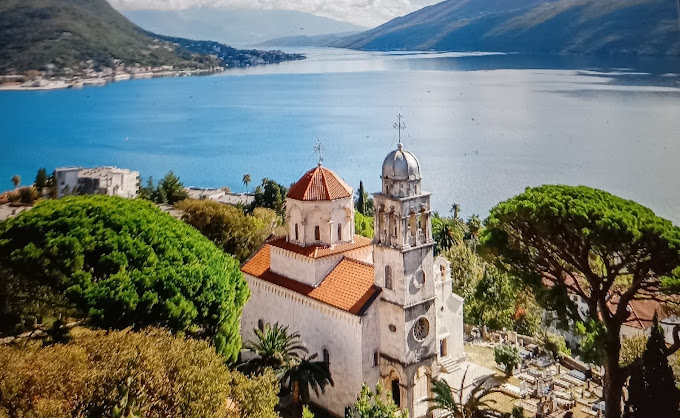
The Savina Monastery is the most important Orthodox religious complex in Herceg Novi and one of the defining landmarks of the town’s eastern coastline. Located in the Savina district, approximately two kilometres east of Herceg Novi Old Town, the monastery occupies an elevated, wooded position overlooking the entrance to the Bay of Kotor. Its setting connects religious heritage with the natural landscape that characterises this quieter part of the municipality.
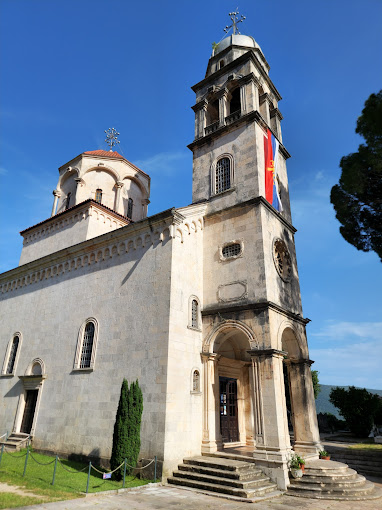
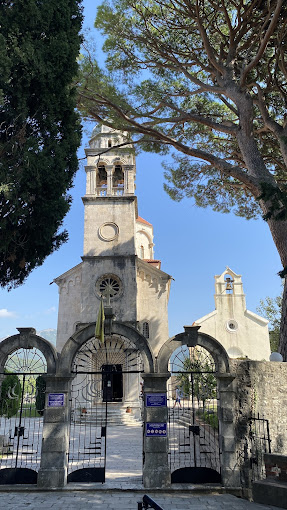
The monastery complex developed between the 15th and 18th centuries, although monastic activity on the site likely predates the surviving structures. Today, the complex consists of three churches: the Small Church of the Dormition, the Church of Saint Sava, and the larger Church of the Dormition, which forms the architectural centre of the ensemble. The layered construction reflects periods of Venetian, Ottoman, and later regional influence, mirroring the broader political history of Herceg Novi and the Bay of Kotor.
The Church of the Dormition, completed in the late 18th century, represents the most architecturally significant element of the complex. Built from finely cut local stone, the structure combines late Baroque influences with traditional Orthodox spatial organisation. Its façade remains relatively restrained, while the bell tower and balanced proportions give the building a subtle monumentality that distinguishes it from smaller parish churches found across the municipality.
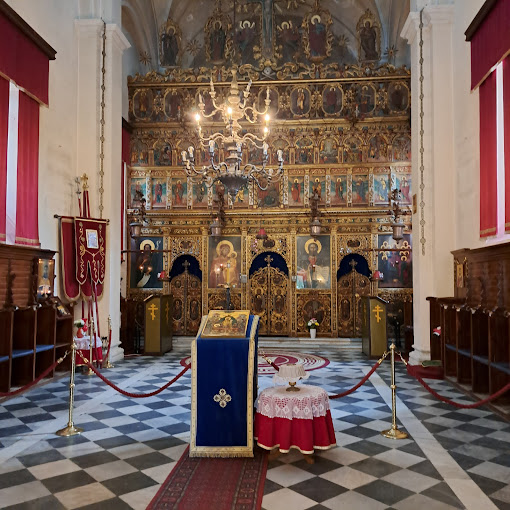
Inside, the monastery preserves one of its most valuable artistic features: an elaborate 18th-century iconostasis characterised by intricate woodcarving and gilded detail. The icons reflect Byzantine traditions alongside Adriatic artistic influences, illustrating the cultural exchange that shaped religious art in coastal Montenegro. The monastery treasury contains manuscripts, liturgical vessels, and ecclesiastical artefacts that document centuries of Orthodox religious life in Herceg Novi.
Beyond its architectural and artistic importance, Savina Monastery has historically functioned as a centre of education and cultural preservation. During periods of political transition, it provided continuity for the Orthodox community and played a stabilising role within the eastern districts of the town. Its influence extended beyond purely spiritual matters, contributing to the cultural identity of the surrounding Savina and Meljine areas.
The monastery’s landscaped grounds form an essential part of the experience. Cypress and pine trees frame the stone buildings, while terraced paths connect the churches with viewpoints overlooking the Bay of Kotor. The site lies within walking distance of the Savina coastline, where small pebble beaches and swimming spots offer a contrast between contemplative heritage and relaxed seaside activity.
Today, Savina Monastery remains an active religious institution and a key cultural attraction in Herceg Novi. Within the broader context of historic churches in the municipality — including those in Herceg Novi Old Town — it provides an essential reference point for understanding the town’s eastern development, Orthodox heritage, and the enduring relationship between sacred architecture and the coastal landscape.
Rate us and Write a Review
- Closed Now09:00 AM - 05:00 PM
- Monday09:00 AM - 05:00 PM
- Tuesday09:00 AM - 05:00 PM
- Wednesday09:00 AM - 05:00 PM
- Thursday09:00 AM - 05:00 PM
- Friday09:00 AM - 05:00 PM
Nearby