

Herceg Novi offers a different experience from many Adriatic destinations. Rather than concentrating its attractions in a single historic core or resort strip, the town unfolds gradually across hillsides, fortifications, promenades, beaches, and neighbouring settlements. What there is to do in Herceg Novi depends largely on where you are standing. This layered experience is rooted in the history of Herceg Novi, which shaped the town’s relationship with coast, urban form, and defensive strategy over centuries.
This guide approaches the town by area, reflecting how geography, history, and modern development shaped each zone. From medieval fortresses above the harbour to 20th-century health tourism along the coast, Herceg Novi’s activities are inseparable from its layered urban form.
To understand how these zones fit together, our guide to the areas and neighbourhoods of Herceg Novi provides detailed context for each part of the town.
Understanding this structure allows visitors to experience the town more deeply, moving beyond checklists toward an appreciation of place, context, and continuity.
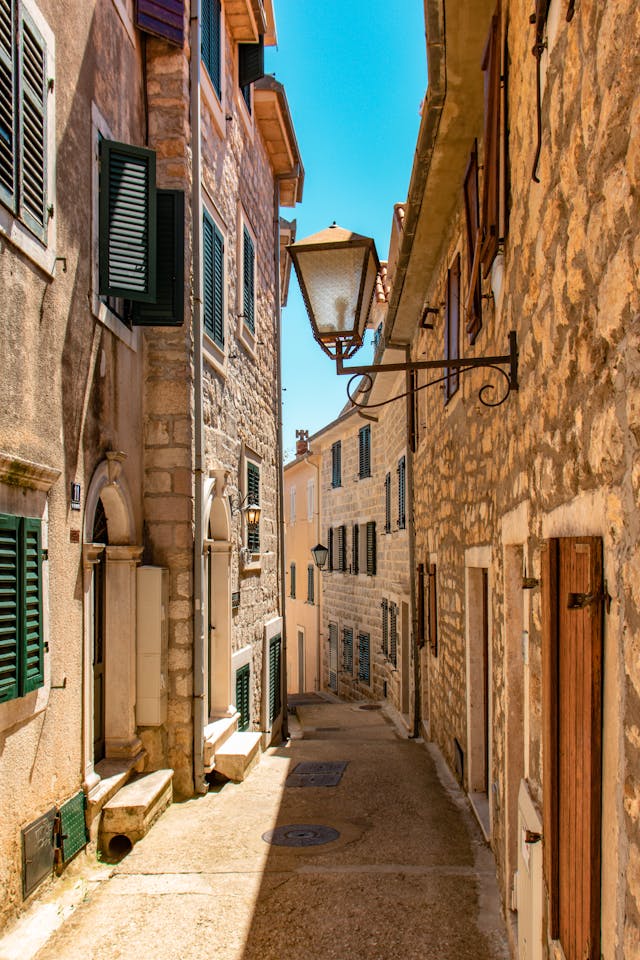
The Old Town (Stari Grad): History, Fortresses, and Vertical Exploration
The Old Town of Herceg Novi forms the historical and symbolic heart of the settlement. Founded in 1382 by King Tvrtko I of Bosnia, the town was conceived as a fortified stronghold rather than a commercial port. This defensive origin still defines how visitors experience the area today.
Exploring the Fortifications
The Old Town is dominated by a series of fortresses constructed and expanded between the late 14th and 18th centuries. Forte Mare Fortress, originally built shortly after the town’s founding, guarded the harbour and controlled maritime access. Its walls, towers, and sea-facing platforms reflect successive Bosnian, Ottoman, and Venetian modifications.
Higher above the town stands Kanli Kula Fortress, constructed during Ottoman rule in the 16th century. While later known as a prison, its original function was defensive. Today, it serves as an open-air theatre, hosting concerts and cultural events during the summer months.
Overlooking everything from the hills is Španjola Fortress, built by the Ottomans and later adapted by the Spanish and Venetians. Though less developed for tourism, its position illustrates the strategic importance of controlling the town from above.
Visiting these fortifications is not just sightseeing; it is a physical experience. Steep climbs, stone stairways, and shifting viewpoints reinforce the Old Town’s original military logic.
Walking the Old Town
Movement within the Old Town of Herceg Novi is almost entirely vertical. Streets quickly give way to narrow stone staircases that climb and descend through compact residential quarters, linking small squares, churches, and former defensive passages. This pedestrian network reflects a settlement shaped by terrain and military necessity rather than formal urban planning.
Most walks begin near the Clock Tower, constructed in the 17th century during Ottoman administration. From here, Njegoševa Street serves as one of the primary access routes into the Old Town, quickly narrowing as it transitions from the lower town into the historic core.
As Njegoševa Street rises, it branches into smaller stairways and passages leading toward residential zones and public spaces. One of the most prominent is Nikola Đurković Square, a long-established civic focal point framed by historic stone buildings. The square has traditionally functioned as a meeting place and remains central to Old Town life today.
From this area, walkers move along interconnected stair routes such as Marka Vojnovića Street and Save Kovačevića Street, where tightly packed houses, small courtyards, and shaded landings reflect centuries of continuous habitation. These streets were designed for foot traffic, with sharp turns and changes in elevation that limited visibility and controlled movement within the fortified town.
Along these routes stand several historic churches that illustrate the Old Town’s religious continuity. The Church of St. Michael the Archangel occupies a central position within the Old Town, while the nearby Church of St. Jerome reflects the influence of Catholic communities during periods of Venetian administration.
Descending paths lead back toward the harbour via stepped lanes such as Belavista Street, where changing elevations open brief views across the Bay of Kotor. Stone retaining walls, former gate fragments, and defensive terraces encountered along the way reveal how movement between town and sea was once carefully regulated.
Despite centuries of political change elsewhere in Herceg Novi, the internal street pattern of the Old Town has altered very little since the early modern period. Walking these named streets and stairways offers one of the most authentic urban experiences on the Adriatic, allowing visitors to navigate a townscape shaped by defence, daily life, and long-term continuity.
The Harbour and Lower Town: Promenades and Public Life
Below the Old Town lies the harbour zone and lower coastal strip, where Herceg Novi’s relationship with the sea became more civic and recreational over time.
The Šetalište Promenade
The seaside promenade stretches westward from the Old Town through Topla and toward Igalo. Developed primarily in the 20th century, it reflects the town’s transition from fortress settlement to leisure destination.
Walking the promenade is one of the simplest yet most revealing activities in Herceg Novi. It connects cafes, small beaches, historic buildings, and residential neighbourhoods, offering constant views across the Bay of Kotor.
The promenade also functions as a social space. Locals walk, cycle, and gather here year-round, reinforcing its role as a living part of the town rather than a tourist enclave.
Swimming and Harbour Access
Small concrete piers and ladders along the promenade provide direct access to the sea. While not traditional sandy beaches, these swimming spots are popular for quick dips, particularly in summer.
This informal approach to the coastline reflects Herceg Novi’s long-standing maritime culture, where the sea was both workplace and resource before becoming a leisure asset.
Topla: Everyday Herceg Novi and Urban Views
Topla occupies the slopes immediately above the Old Town and lower harbour. Developed primarily in the late 19th and early 20th centuries, it represents the town’s expansion beyond medieval fortifications.
Local Life and Viewpoints
Unlike the Old Town, Topla follows a more conventional street layout, accommodating schools, shops, and residential buildings. For visitors, it offers a glimpse into everyday life rather than curated history.
Topla’s elevation provides sweeping views across the bay, especially from higher streets and terraces. These vantage points help contextualise the town’s geography, showing how the settlement stretches along the coastline rather than radiating from a single centre.
Walking through Topla is less about landmarks and more about atmosphere—balconies, gardens, and cafes reveal how Herceg Novi functions outside its historic core.
Igalo: Health Tourism, Beaches, and Modern Leisure
Igalo marks a major shift in both geography and purpose. Located west of the town centre, it developed largely in the 20th century as Herceg Novi embraced tourism and wellness.
Health and Rehabilitation Heritage
Igalo’s rise is closely tied to health tourism. Interest in the area’s mineral-rich mud and favourable climate began in the early 1900s, but development accelerated after World War II.
The establishment of the Igalo Institute in 1949 positioned the area as a leading rehabilitation and medical tourism centre in socialist Yugoslavia. Patients from across the region visited for physical therapy, respiratory treatments, and post-injury recovery.
While medical tourism remains active, Igalo’s facilities also helped drive hotel construction, infrastructure development, and the extension of the seaside promenade.
Beaches and Accessibility
Igalo is significantly flatter than the historic centre of Herceg Novi, a feature that directly shaped its development as the town’s primary beach area. This layout contributed to beaches in Herceg Novi becoming a defining part of leisure and coastal life, especially in summer. Along this stretch of coast are several well-known beaches, including Igalo Beach, Rafaello Beach, and Galeb Beach, each characterised by a mix of sand and fine pebbles with gently shelving, shallow water. These conditions make the area particularly suitable for families, older visitors, and those seeking relaxed, extended time by the sea.
The openness of Igalo’s coastline contrasts sharply with the steep, compact form of the Old Town, where direct beach access is limited. This difference reflects Herceg Novi’s 20th-century shift away from defensive urban planning toward health tourism, leisure, and organised seaside recreation, with Igalo emerging during the Yugoslav period as the town’s most accessible and purpose-built beach zone.
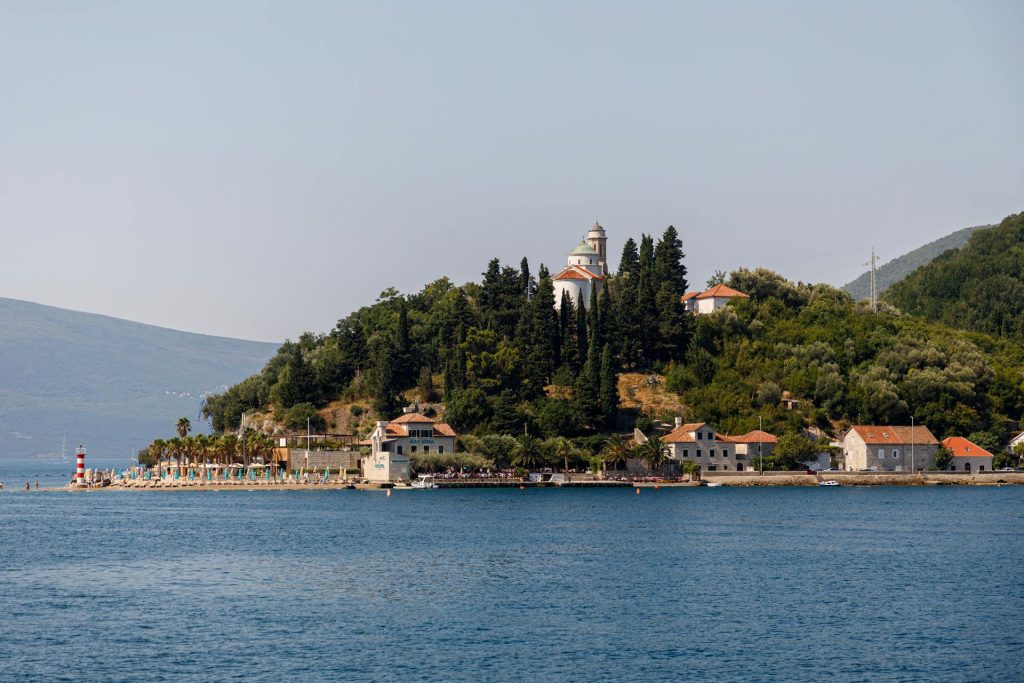
Savina: Monastic Heritage and Quiet Exploration
East of the Old Town lies Savina, an area defined by religious heritage and restrained development.
Savina Monastery and Cultural Continuity
The Savina Monastery complex anchors the area historically and spiritually. Its origins date back to at least the 11th century, with major construction phases in the 17th and 18th centuries. The monastery played a central role in preserving Orthodox religious and cultural identity during periods of political change.
Visiting Savina offers a quieter, more contemplative experience than the town centre. Paths through greenery, stone churches, and coastal walks encourage slower exploration.
Coastal Walks and Villas
During the Austro-Hungarian period in the 19th century, Savina became a preferred residential area for officials and wealthy families. Villas built during this era reflect European architectural trends and the area’s reputation as a refined retreat.
Today, Savina remains less commercialised, appealing to visitors interested in heritage, tranquillity, and scenic coastal paths.
Meljine and the Eastern Coast: Connectivity and Movement
Meljine occupies a transitional zone between Herceg Novi and the broader Bay of Kotor coastline.
Maritime Infrastructure
Historically, Meljine supported naval and logistical functions, particularly during Austro-Hungarian administration. In the modern era, its marina and ferry connections shape its character.
For visitors, Meljine serves as a practical base for movement rather than sightseeing. Ferries and road connections link Herceg Novi with other coastal towns and neighbouring countries, reinforcing the town’s role within a wider regional network.
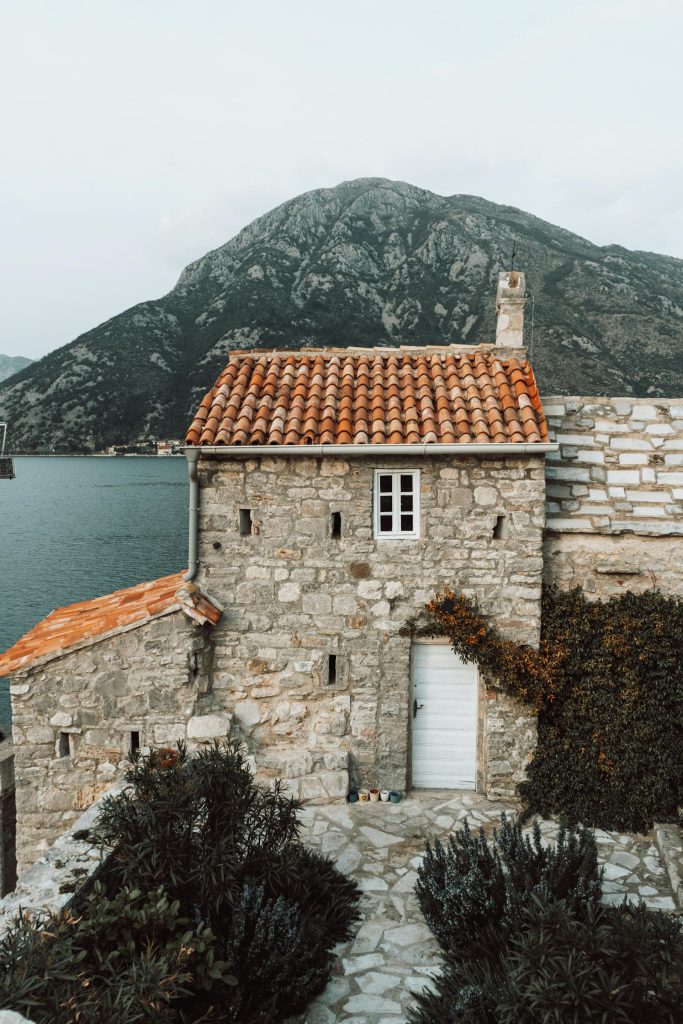
Western Coastal Villages: Baošići and Đenovići
Further west lie Baošići and Đenovići, coastal villages that remain administratively part of Herceg Novi.
From Fishing Villages to Residential Retreats
Historically small fishing communities, these villages retained a rural character well into the 20th century. Improved road access and marina development—particularly in Đenovići—have driven gradual transformation in recent decades.
Despite modern construction, both areas remain quieter than the town centre. Low-rise buildings, waterfront promenades, and small beaches define the landscape, making them suitable for longer stays and visitors seeking privacy.
These villages also serve as practical bases for exploring the wider bay without the intensity of the central town.
Day Trips and the Wider Region
Herceg Novi’s position at the entrance to the bay makes it an effective starting point for regional exploration.
Bay of Kotor and Coastal Towns
Boat and road connections allow easy access to nearby historic towns such as Perast and Kotor, each offering distinct architectural and historical experiences.
Luštica Peninsula and Coastal Nature
To the south lies the Luštica Peninsula, known for undeveloped coastline, olive groves, and traditional villages. Boat excursions often include swimming stops and visits to the Blue Cave, highlighting the region’s natural diversity.
These excursions complement Herceg Novi’s urban experiences, reinforcing its role as both destination and gateway.
Seasonal Events and Cultural Life
Herceg Novi has long been recognised as one of Montenegro’s most active cultural centres, with a structured calendar of annual events that has developed primarily since the mid-20th century. While smaller cultural programmes take place year-round, the town’s major festivals follow a seasonal rhythm closely tied to climate, tourism cycles, and the reuse of historic public spaces.
The cultural year traditionally begins in late winter with the Herceg Novi Mimosa Festival, first held in 1969. Originally created to mark the blooming of mimosa flowers and the arrival of spring, the festival typically runs from February through March. Events include parades, concerts, exhibitions, and culinary programmes held across the town, making it one of the longest-running and most recognisable festivals in Montenegro. The Mimosa Festival plays a key role in extending the tourist season beyond summer and remains a defining feature of Herceg Novi’s cultural identity.
During the summer months, cultural activity intensifies significantly. One of the most prominent events is the Herceg Novi Film Festival – Montenegro Film Festival, established in 1987. Focused primarily on regional and international feature films, the festival takes place in August and uses open-air venues throughout the town. Screenings are traditionally held at Kanli Kula Fortress, whose 16th-century stone walls provide a distinctive backdrop that has become closely associated with the festival’s image.
Kanli Kula also serves as a central venue for theatre and music performances throughout the summer season. Since the 1960s, the fortress has been adapted for cultural use, hosting concerts, stage productions, and guest performances as part of organised summer cultural programmes. This reuse of a former military structure exemplifies Herceg Novi’s approach to integrating heritage architecture into contemporary public life.
Another long-established summer event is the Herceg Novi Summer Music Festival, which brings classical, jazz, and contemporary performances to multiple venues, including outdoor stages in the Old Town and along the promenade. These concerts often feature both Montenegrin and international artists and contribute to the town’s reputation as a summer cultural destination rather than solely a resort.
In addition to major festivals, Herceg Novi hosts regular literary evenings, art exhibitions, and folklore performances, many of which are tied to anniversaries, national holidays, or local historical commemorations. Events connected to Orthodox religious holidays are particularly visible, reflecting the town’s long-standing religious and cultural continuity.
Taken together, these annual events illustrate how Herceg Novi’s cultural life has evolved alongside its physical environment. Historic fortresses, public squares, and seaside promenades are not treated as static monuments, but as active stages for contemporary cultural expression. This continuity between past and present is central to the town’s character and provides visitors with opportunities to engage with Herceg Novi not only as a place to visit, but as a living cultural centre with traditions that repeat, adapt, and endure year after year.
Experiencing Herceg Novi as a Whole
What there is to do in Herceg Novi cannot be reduced to individual attractions. The town’s appeal lies in movement—between heights and coastlines, between centuries and architectural styles, between quiet residential zones and lively public spaces.
Each area reflects a distinct phase in the town’s evolution, from medieval defence to Austro-Hungarian modernisation and Yugoslav tourism development. Experiencing these layers allows visitors to understand Herceg Novi not as a static resort, but as a living historical landscape.
As Herceg Novi Directory grows, this guide will serve as the foundation for more detailed explorations of beaches, heritage sites, day trips, and local life—helping visitors engage with the town in an informed, meaningful way.
